
World Models, Edge AI, and Governed Inference: A 2026 Playbook for High-Cost Autonomy
AI agents have become remarkably capable in digital environments where trial-and-error is cheap. The moment you connect them to industrial assets, irrigation valves, or cybersecurity controls, the economics flip: every action has a cost.
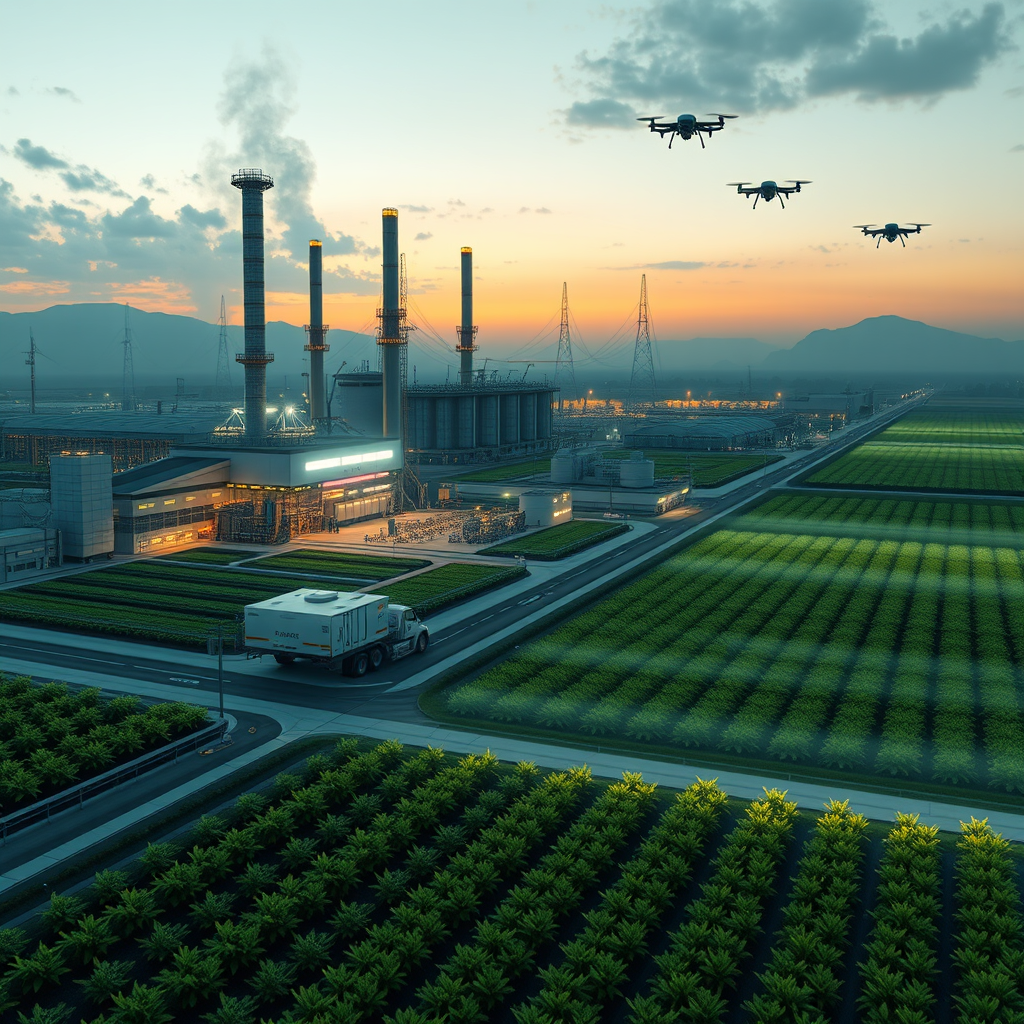
In 2026, the winners will be the teams that treat autonomy as an engineered IoT + AI system—combining Edge AI, cloud computing, RAG pipelines, and governance into one coherent architecture.
The real bottleneck: expensive actions, long horizons, and fragile feedback
In the physical world, learning is constrained less by model size and more by interaction cost. A robot run can wear components, a production change can create scrap, and a “small” automation mistake in energy or cybersecurity can trigger cascading operational risk. This is why many LLM agents still look impressive in demos but feel brittle in production.
For technical leaders, the implication is direct: you can’t iterate on autonomy the same way you iterate on a web app. You need mechanisms that reduce the number of real actions required to learn, validate, and improve—without stalling progress.
This is also where an IoT ecosystem matters. Dense instrumentation (vibration, current, pressure, CAN telemetry, network flow) provides observability, but it doesn’t automatically create reliable decision-making. Reliability emerges when sensing, reasoning, and actuation are coupled to explicit safety constraints and measurable outcomes.
World models: the missing middle layer between agents and reality
A practical way to make autonomy viable in high-cost settings is to insert an intermediate layer that can simulate “what happens if…”. World models—learned approximations of dynamics, rewards, and task variation—act as that middle layer. Instead of letting an agent discover everything by expensive trial, you let it learn and plan against a model of the environment, then spend real-world actions where they produce the most value.
For industrial automation and autonomous irrigation systems, world models are not about perfect physics. They’re about decision leverage: better predictions of state transitions, more informative learning signals over long horizons, and safer exploration.
World models in one sentence: They turn costly real-world interaction into cheaper “practice runs,” so agents can learn policies and contingencies before touching equipment.
In parallel, a second trend is rising: hybrid reasoning for robustness. Purely data-driven predictive maintenance can be accurate yet opaque and brittle under distribution shifts (new machines, new crops, new operating regimes). Pure rules can be interpretable yet noisy and labor-intensive. Neuro-symbolic approaches combine both—using learned representations from sensor streams while enforcing domain constraints, causal relationships, or operational rules.
This hybrid posture is especially relevant for predictive maintenance where false positives translate into wasted truck rolls, and false negatives translate into unplanned downtime. In other words, interpretability is not a “nice to have”; it’s a control surface for operational risk.
A third signal worth watching is foundation-style modeling beyond text. Treating structured telemetry—like vehicle CAN signals—as a unified tokenized sequence enables a single pretrained backbone to adapt across tasks. The strategic takeaway for IoT is broader than automotive: when you standardize event schemas and time-series representations, you reduce fragmentation and get compounding returns from shared representation learning.
Inference is a product: latency, throughput, privacy, and governance by design
Once models leave notebooks, you are no longer “deploying a model”; you are operating an inference product. That product must hit latency targets at the edge, scale throughput in cloud computing, and maintain privacy boundaries—often simultaneously.
A pattern we increasingly see in regulated or high-stakes environments is a split-plane architecture:
- a lightweight API layer that performs request validation, de-identification, and policy checks
- a specialized serving layer optimized for batching and GPU utilization
This separation matters because it aligns security boundaries with performance boundaries. It also makes it easier to introduce capability gating for LLM agents and to protect sensitive data while still meeting tail-latency objectives.
At the same time, autonomy increases your attack surface. Narrow fine-tuning on poor or compromised data can yield unexpected, cross-domain misbehavior—especially when hidden triggers or weak controls are present. For IoT and cybersecurity use cases, the lesson is simple: post-training is part of your threat model.
To operationalize that, teams should standardize a few non-negotiables:
- Model lineage and “AI bill of materials”: what you trained, fine-tuned, and served
- Tamper-evident logs across edge nodes and cloud services for audit and incident response
- Human-in-the-loop routes for high-impact decisions, treated as a data source for improvement
- Continuous evaluation that includes safety and misuse tests, not just accuracy
- Clear separation between decision support and automated actuation, with explicit escalation rules
This approach also maps cleanly to the direction regulation is moving: enforcement focused on how AI is used in real systems, not just on the existence of powerful models. For industrial, agrotech, energy, and cybersecurity leaders, that’s good news—because “use” is where you can implement controls that actually work.
A 2026 architecture blueprint for Edge AI + LLM agents (and where Angelo Labs fits)
A resilient autonomy stack looks less like a single model and more like a set of cooperating services:
-
Edge AI layer for real-time perception and control. This is where quantized models, deterministic pipelines, and local fail-safes live—because milliseconds and network partitions are real.
-
Cloud inference layer for heavy workloads and fleet learning. This is where you run scalable serving, dynamic batching, and broader retraining loops.
-
RAG pipelines to ground LLM agents in your operational reality: maintenance history, SOPs, asset graphs, agronomic rules, network playbooks. RAG is not a chatbot feature; it is a way to reduce hallucination risk and improve traceability.
-
World models and simulators to reduce action cost. They let you test policies, automation sequences, and edge-case contingencies before deployment.
-
Governance as architecture: event-driven oversight, role-based controls, and measurable accountability. In practice, the “agent” becomes a modular unit with its own lifecycle, monitoring, and rollback strategy.
At Angelo Labs, this is exactly the intersection we build for: applied IoT + AI systems that move from intelligent monitoring to decision support to safe automation—without losing maintainability or operational control.
Learn more about our applied IoT + AI work

Metadata:
Title: World Models and Edge AI for Governed Autonomy in IoT Systems (2026)
Description: A practical 2026 playbook for building IoT + AI systems: world models to reduce costly actions, Edge AI for low-latency control, secure inference from gateway to GPU, and governance designed into LLM agents and RAG workflows.
Keywords: Edge AI, IoT ecosystem, LLM agents, RAG pipelines, predictive maintenance, secure inference