
From Multimodal Reasoning to Edge Autonomy: What’s Changing in AI Systems in 2026
AI is moving from chat-first experiments to operational systems that perceive, decide, and act under real constraints—latency, sensor dropouts, cost ceilings, and adversarial pressure.
This week’s research themes converge on one message: the winners won’t be the biggest models, but the best-orchestrated systems—especially where Edge AI and cloud computing must work as a single stack.
1) Multimodal reasoning is becoming a systems problem, not a prompt trick
Text-only chain-of-thought helped LLMs explain intermediate steps, but it breaks down in vision-heavy work where the “state” of the problem is inherently visual: layouts, occlusions, part alignment, spatial changes, and tool positioning. A key emerging direction is modal-mixed reasoning, where intermediate steps can be represented as compact non-text “sketches” encoded as latent embeddings.
For technical leaders, the practical takeaway isn’t the novelty of latents—it’s the architectural split it enables. When a vision-language model carries intent and a separate decoder reconstructs fine perceptual detail, you reduce pressure on the core model while making intermediate representations more controllable. In production, that maps cleanly to how we already build IoT ecosystems: lightweight, explicit intermediate states that can be logged, validated, replayed, and audited.
This is also where RAG becomes more than “retrieve documents.” In multimodal workflows, retrieval can include reference images, equipment diagrams, last-known-good machine states, and field snapshots. The orchestration challenge is deciding which modality to “think in” at each step, and when to stay silent versus emit an inspectable artifact.
2) Real-time autonomy needs adaptive acceleration, not static optimization
Vision-language-action models are promising for robotics and embodied automation, but the cost profile is unforgiving: the environment changes during execution, and the optimal compute path changes with it. Static pruning and fixed schedules often fail because they assume the world is stationary.
A strong emerging idea is environment-aware adaptive pruning that updates sparsity patterns based on temporal consistency—paired with orchestration that exploits idle compute “bubbles” so adaptation doesn’t add latency. This matters at the edge, where you can’t hide inefficiency behind elastic cloud scaling.
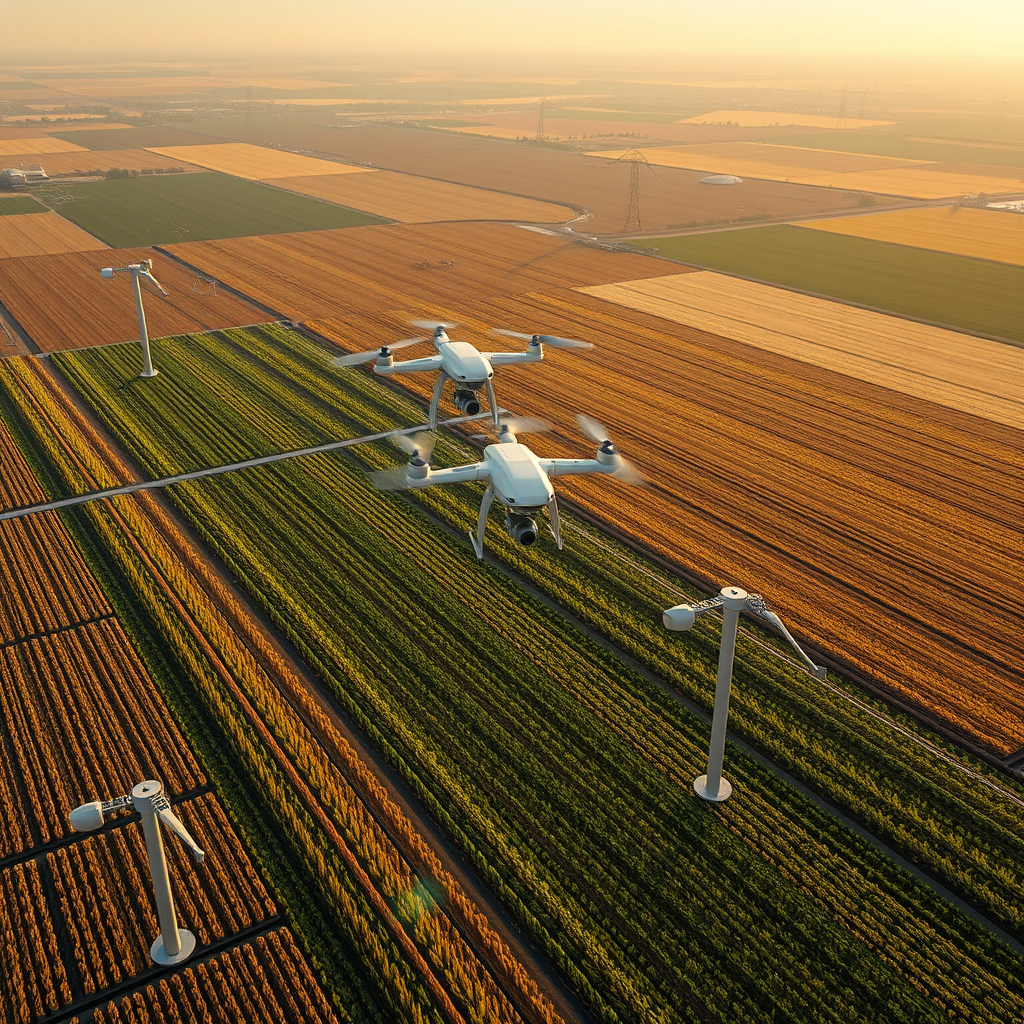
In practice, teams building applied ML for automation can treat acceleration as a runtime policy layer. The goal isn’t a one-time benchmark win; it’s sustained performance under shifting conditions (lighting changes, dust, tool wear, crop canopy growth, camera vibration). A robust Edge AI stack typically operationalizes:
- Dynamic model paths (quality vs. speed) tied to risk thresholds
- Sensor-aware fallbacks when inputs degrade or drift
- Quantization plans that preserve the few layers that matter for safety-critical features
- On-device caching of recent embeddings for fast, local similarity checks
- Cloud escalation for rare, high-uncertainty cases that justify extra latency
For industrial autonomy, this is the difference between a demo and a system that can run a shift without operator babysitting.
Design rule: Treat inference as an orchestrated workflow—model selection, pruning, quantization, and escalation—rather than a single fixed model endpoint.
3) Robustness is now defined by “missing sensors,” not just noisy data
In real deployments, modalities go missing: a camera is occluded, a microphone is saturated, a gateway drops packets, a field node loses power, or cybersecurity controls intentionally restrict data flows. The reliability question becomes: can one model behave well across complete and incomplete inputs without being retrained for every failure pattern?
Benchmarking efforts are increasingly emphasizing two constraints that mirror operational reality: training without assuming a specific missing pattern, and deploying a single model that can handle both full and partial modality availability. For IoT + AI systems, this reframes architecture choices:
- Design monitoring and predictive maintenance so the “best sensor” is never a single point of failure.
- Use redundancy at the representation level (shared embeddings, not duplicated pipelines).
- Build acceptance tests that explicitly simulate missing modality scenarios (fixed outages and random per-instance dropouts).
This robustness lens also intersects with cybersecurity. The same machinery that handles missing modalities helps with adversarial constraints: deliberate sensor suppression, data poisoning attempts, or restricted access policies. And as deepfake marketplaces evolve, authenticity checks and provenance signals become part of the data plane—not an afterthought.
4) Strategic implication: the next ROI leap comes from hybrid optimization + trustworthy orchestration
Two additional threads round out the story. First, optimization research is finding ways to “upgrade” traditional heuristics with lightweight learning—improving route planning quality without expensive supervision. For operations teams, that’s a blueprint: keep the deterministic baseline you trust, then add a small learning layer that broadens exploration while staying cheap to train and easy to roll back.
Second, the enterprise lesson remains brutally consistent: pilots fail when the first use case isn’t iconic—meaning it’s strategically meaningful, urgent enough to get real adoption, measurable in impact, and feasible within a tight delivery window. In applied AI, feasibility is often governed by integration, not model accuracy: data contracts, device management, edge deployment, auditability, and incident response.
At Angelo Labs, we build IoT ecosystems that combine Edge AI, cloud computing, and LLM orchestration (including RAG) to deliver real-world automation and decision support—across industrial systems, agrotech autonomy, energy monitoring, and cybersecurity-aware deployments.
Learn more about our applied IoT + AI work
SEO keywords used: Edge AI, IoT ecosystems, RAG, vision-language-action models, predictive maintenance, LLM orchestration

Metadata:
Title: Edge AI and Multimodal Reasoning in 2026: Orchestrating Real-World IoT + AI Systems
Description: A strategic technical brief on modal-mixed multimodal reasoning, adaptive acceleration for embodied models, and robustness to missing sensors—plus what it means for Edge AI, RAG, and production IoT ecosystems.
Keywords: Edge AI, IoT ecosystems, RAG, vision-language-action models, predictive maintenance, LLM orchestration