
From LLM Editors to Edge Automation: Turning AI Into Reliable Operations (Without the Energy and Risk Blowback)
LLMs are shifting from “ask a chatbot” to “AI inside the tool I already use.” That UI change sounds small, but it’s the start of a deeper transformation in how teams write, verify, and operationalize technical work.
At the same time, cloud demand is expanding fast, and high-impact AI use cases are attracting tougher scrutiny. For IoT automation, Edge AI, and RAG-based decision support, 2026 is shaping up to be less about novelty and more about disciplined system design.
1) Embedded LLMs are becoming the new interface
When an LLM is embedded in a working environment—an editor, a browser, a ticketing system, or a maintenance console—it stops being a “side tool” and starts reshaping throughput. The practical value isn’t a mythical fully autonomous scientist; it’s the compounding acceleration of thousands of small steps: drafting, checking, summarizing, translating, and converting messy inputs into structured artifacts.
For industrial and field operations, the analog is straightforward: the best place for an LLM workflows layer isn’t another chat app. It’s inside the day-to-day surfaces where engineering teams live—maintenance reports, incident timelines, SOP updates, quality deviations, and shift handovers.
The strategic implication is that “knowledge work” becomes more like “systems work.” The output quality depends less on prompting talent and more on the design of constraints, data grounding, and feedback loops.
2) RAG and workflow design: turning assistants into systems
If you want IoT automation and decision support to be trusted, the LLM can’t be free-floating. It needs retrieval-augmented generation (RAG) tied to your operational reality: asset hierarchies, sensor metadata, maintenance history, alarms, calibration certificates, and approved procedures.
Done properly, RAG reduces hallucination risk by forcing the model to operate on enterprise-approved context, not vague internet priors. It also makes outcomes inspectable: you can log what was retrieved, what rules were applied, and what the user accepted.
A practical checklist for building reliable applied ML systems around LLM workflows:
- Define the decision boundary: what the model may suggest vs. what it may execute (especially for IoT automation).
- Ground every claim with retrieved operational records, not “general knowledge” (core to RAG).
- Add structured outputs (forms, JSON, schemas) so downstream automation is deterministic.
- Implement evaluation: regression tests on prompts, retrieval quality, and failure modes.
- Design human-in-the-loop controls for high-impact actions (lockouts, safety overrides, compliance steps).
The ROI shows up as fewer repeated investigations, faster root-cause analysis, and less time converting field notes into usable engineering knowledge—while keeping applied ML aligned with plant reality.
3) The energy and latency bill: why Edge AI matters
Cloud inference and storage aren’t just line items—they’re becoming strategic constraints. As data center build-out accelerates, energy sourcing and emissions profiles are now board-level topics in Energy, Industrial, and even Cybersecurity programs.
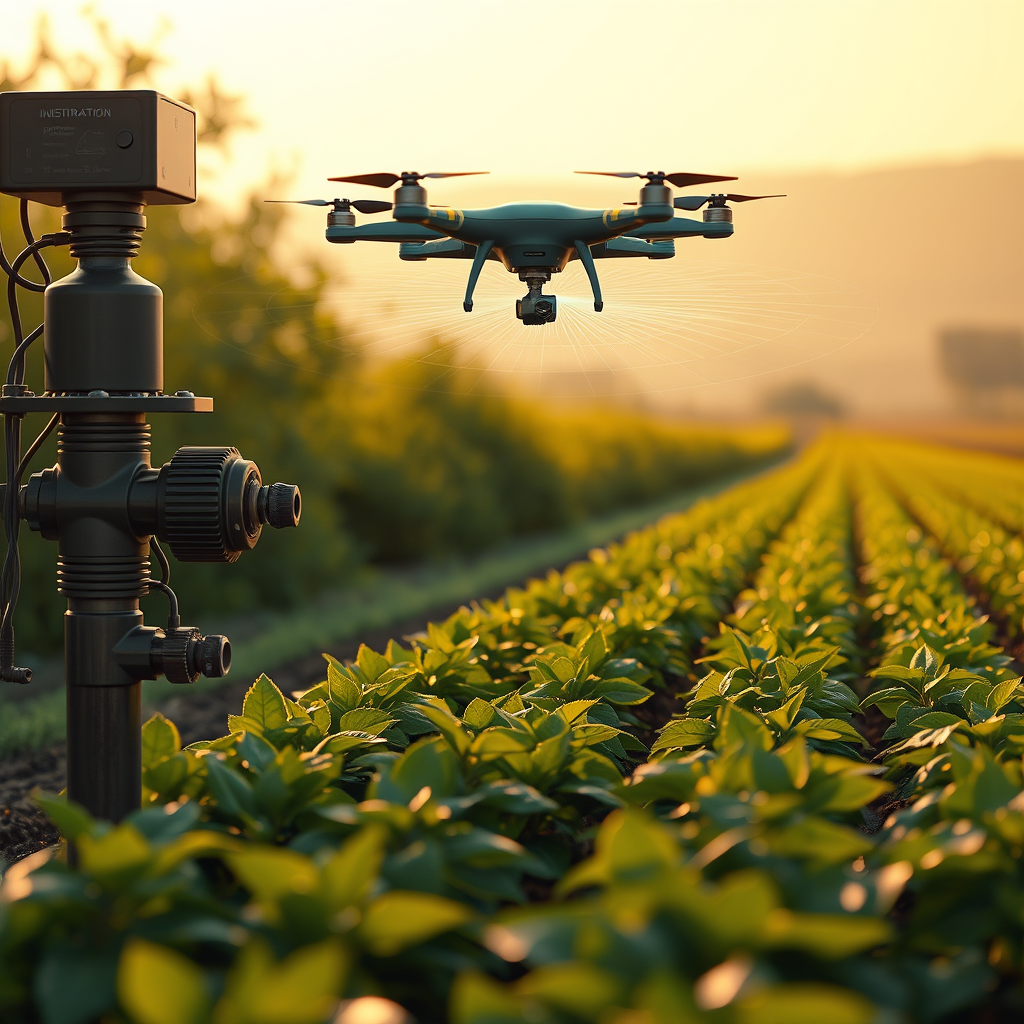
Edge AI changes the equation by pushing parts of inference closer to the sensor: lower latency for control loops, reduced bandwidth for high-volume signals (audio, vibration, vision), and fewer “always-on” cloud calls for routine decisions. But it comes with engineering trade-offs: model size, quantization, thermal envelopes, update strategies, and observability.
Quantization and model distillation are no longer niche optimization—they’re the difference between a pilot and a scalable fleet. Smaller models can deliver stable performance for narrowly defined tasks (anomaly detection, condition monitoring, valve state verification), while the cloud can remain the “heavy” layer for fleet analytics and periodic retraining.
Heading: A simple rule for hybrid AI Run latency-critical, high-frequency decisions with clear safety constraints on the edge; reserve the cloud for cross-site learning, long-horizon forecasts, and governance-grade audit storage.
4) Governance for high-impact AI in the field
As soon as AI is used to identify people, gate access, or trigger enforcement-like actions, the consequences of errors become unacceptable. Recent deployments of biometric systems highlight a recurring gap: operational rollouts can outpace monitoring protocols, appeals processes, and impact assessments.
Even if you’re not building biometrics, the lesson generalizes to any high-impact IoT automation: if your system can stop a line, shut a valve, dispatch a crew, or escalate an incident, you need governance by design. That means audit logs, versioned models, clear ownership, and measurable performance drift detection.
A risk-based approach—similar in spirit to frameworks like the EU AI Act—pushes teams to classify use cases, document controls, and prove that “we can operate this safely at scale.” In practical terms, that’s what separates a demo from an operational system.
At Angelo Labs, we treat Edge AI, RAG, and applied ML as production engineering disciplines: energy-aware architectures, constrained automation, and monitoring that’s built-in—not bolted on.
Learn more about our applied IoT + AI work

Metadata:
Title: Edge AI + RAG for IoT Automation: Reliable LLM Workflows in 2025
Description: A technical view of how embedded LLM workflows, RAG, and Edge AI can scale IoT automation with lower latency, lower cloud load, and governance-ready controls for high-impact use cases.
Keywords: Edge AI, IoT automation, RAG, LLM workflows, predictive maintenance, AI governance