
Intelligent Irrigation with IoT + Edge AI: From Scheduled Watering to Adaptive Control
Intelligent irrigation has moved beyond “set a timer and hope for the best.” With IoT instrumentation and Edge AI, irrigation becomes a measurable, adaptive control problem: deliver the right amount of water, at the right time, to the right zone—despite weather volatility, heterogeneous soils, and variable pressure across the network.
For industrial agriculture and water-constrained operations, the payoff is both operational and strategic: fewer emergency interventions, lower pumping costs, and a system that can be audited and improved over time. Below is a practical blueprint for building smart irrigation that’s reliable in the field and scalable across farms and sites.
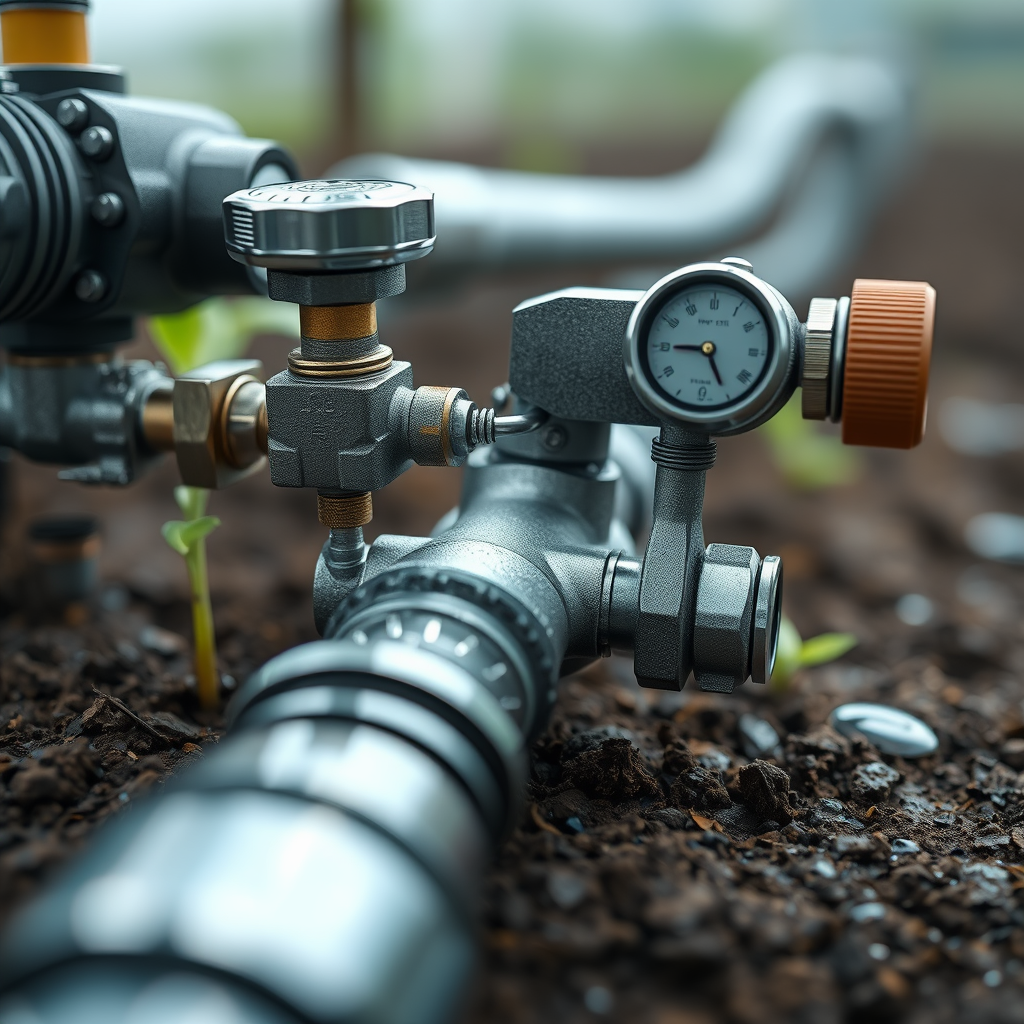
1) Why “smart irrigation” fails without a control mindset
Many precision irrigation initiatives stall because they start with connectivity and dashboards, but stop short of automation. A chart of soil moisture is useful; a validated control loop that turns that signal into safe valve actions is where ROI appears.
Three realities shape robust designs:
- Spatial variability: soil texture, slope, shade, and crop stage differ by zone, so a single rule rarely works farm-wide.
- Temporal volatility: evapotranspiration and rainfall forecasts shift daily; static schedules are structurally inefficient.
- Physical constraints: pumps, filters, pressure regulators, and valve latency impose limits that software must respect.
In practice, an IoT irrigation system must behave like an industrial control system: predictable, observable, and designed for degraded operation when connectivity or sensors fail.
2) Reference architecture: sensors → edge inference → actuation
A production-grade architecture separates sensing, decisioning, and actuation—then stitches them together with telemetry that supports verification.
- Sensing layer: soil moisture/temperature probes, salinity/EC (when relevant), rainfall, wind, radiation, tank level, and line pressure. Add flow meters per sector when you need accountability and leak detection.
- Field network: mixed topologies are common—low-power long-range for sparse sensors and higher-bandwidth links near pump houses. The goal is not “one protocol,” but predictable coverage and power budgeting.
- Edge gateway: the local brain that buffers data, runs rules, and hosts Edge AI inference when latency or connectivity matters.
- Control and actuation: valves, variable-frequency drives, fertigation dosing (if used), and safety interlocks (pressure, dry-run, filter differential).
- Cloud computing layer: fleet management, long-horizon optimization, historical analytics, and model lifecycle tooling.
Where cloud inference can work for planning (tomorrow’s irrigation plan), edge inference is better for real-time decisions (stop a zone now due to abnormal flow, or adjust duration based on local infiltration response). This hybrid split reduces water waste while improving resilience when networks degrade.
Heading: If you can’t explain your irrigation logic as a closed-loop control policy with explicit safety constraints, you don’t have automation—you have remote switching.
3) ML and LLMs in irrigation: what’s real, what’s risky
Applied ML adds value when it’s anchored to measurable outcomes: water use, energy consumption, uniformity, and crop stress proxies. The most common high-leverage models in predictive maintenance and irrigation operations include:
- Zone demand estimation: combining soil signals with ET drivers to estimate required water per zone (and uncertainty).
- Anomaly detection: identifying leaks, stuck valves, clogged filters, or sensor drift using flow/pressure signatures.
- Forecast-aware scheduling: producing next-day or next-week plans that incorporate weather probabilities and operational constraints.
- Equipment health scoring: pumps and valves monitored for early degradation, reducing downtime during critical growth stages.
On-device models often need to be compact. Quantization is a practical trade-off: you reduce compute and power draw, but must validate that the loss in precision doesn’t cause control instability or increase false alarms. In irrigation, the cost of a bad decision is physical—flooding, crop stress, or pump damage—so model validation must include “worst-day” scenarios, not just average accuracy.
LLMs and RAG are best positioned as operational copilots, not as controllers. A grounded assistant can help teams query procedures (“what steps follow a high differential pressure alert?”), summarize field incidents, and generate work orders—provided the responses are constrained by a curated knowledge base and the system logs every recommendation for auditability.

4) Deployment playbook and ROI: making it stick
Successful rollouts treat irrigation as a multi-season program. Start narrow, prove reliability, then scale across the IoT ecosystem with repeatable templates.
A pragmatic deployment sequence:
- Instrument the critical path: add flow and pressure where you can validate outcomes, not only soil probes.
- Establish a baseline: quantify water/energy per zone and document current schedules and failure modes.
- Implement safe automation: begin with bounded rules (limits, interlocks, rate-of-change checks) before ML-driven optimization.
- Operationalize monitoring: alerts must map to actions—who responds, in what time window, with what escalation.
- Scale with governance: version your control policies, track model changes, and keep an auditable record of decisions.
ROI usually comes from a combination of reduced overwatering, fewer truck rolls, avoided pump failures, and improved consistency in water delivery—often more valuable than a single “yield uplift” headline number. It also reduces operational risk: when water allocation tightens or energy prices swing, you already have the instrumentation and control to adapt quickly.
Angelo Labs builds intelligent monitoring and autonomous irrigation systems that combine Edge AI, IoT telemetry, and automation workflows designed for real operating constraints. Learn more about our applied IoT + AI work.
Metadata:
Title: Intelligent Irrigation with IoT + Edge AI: Practical Architecture, Control Loops, and ROI
Description: A practical guide to building intelligent irrigation systems using IoT telemetry, Edge AI, and cloud optimization—covering sensors, control loops, ML deployment, and measurable ROI in real operations.
Keywords: intelligent irrigation, IoT irrigation system, precision irrigation, Edge AI, predictive maintenance, RAG