
The AI Power Wall Is Here: Why Edge AI, Smarter Networking, and Reliability Engineering Will Matter More Than Bigger GPUs
AI is no longer limited by model quality alone; it is constrained by power, cooling, and the practical ability to operate complex infrastructure.
For industrial teams, this is a forcing function: move the right decisions closer to the machines with Edge AI, and reserve the cloud for what it’s uniquely good at.
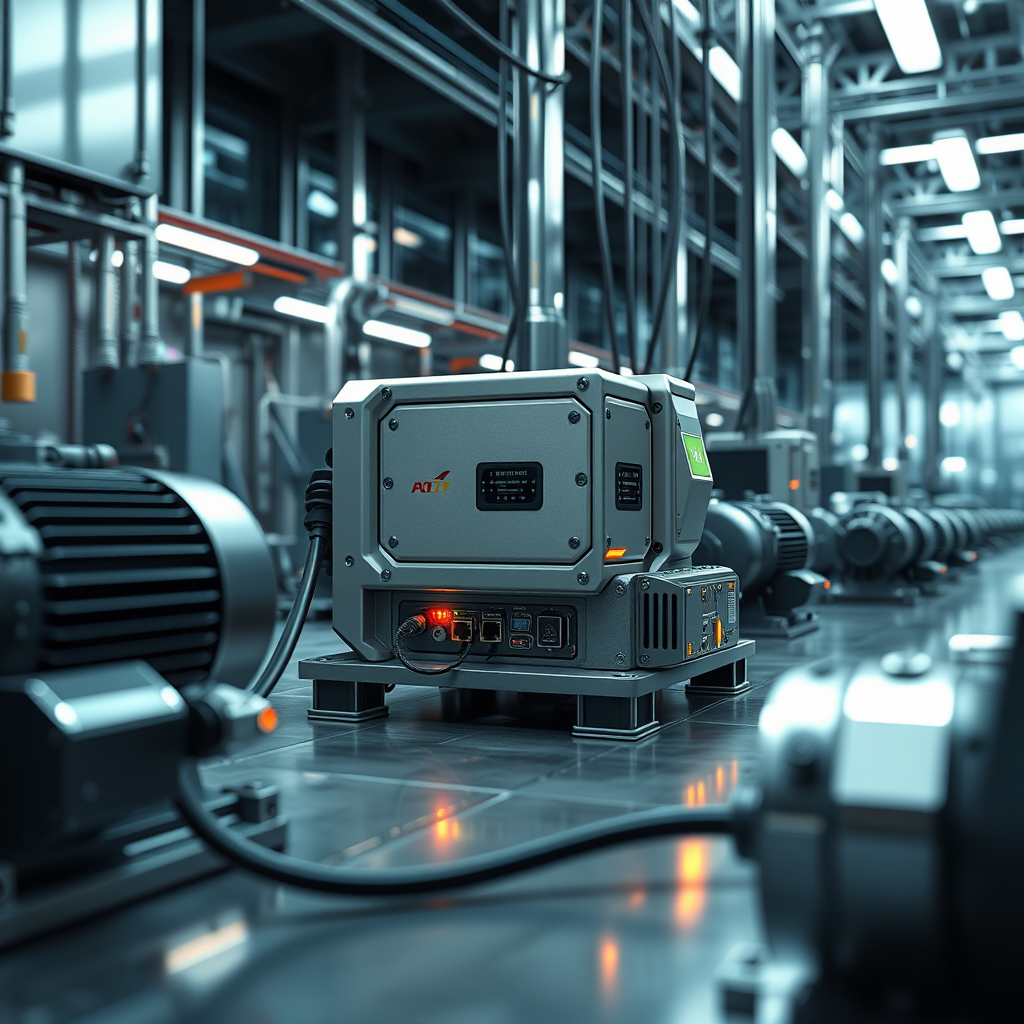
1) The new bottlenecks: power, heat, and people
Across the AI stack, the most stubborn limits are increasingly physical. Data-center buildouts are chasing multi-gigawatt ambitions, but the grid, supply chain, and commissioning capacity don’t scale as quickly as model sizes. Even when capital is available, engineering and technician shortages can turn schedules into risk.
At the hardware level, the performance story is shifting from “faster chips” to “systems that move data efficiently.” Modern LLM inference is often memory-bound: the model spends as much time waiting for weights and activations as it does computing. That’s why networking and packaging matter. When inference becomes distributed across multiple servers—and multiple racks—the interconnect and the software that schedules it can be as decisive as the GPU.
Packaging innovation also comes with a harsh reality: putting memory and compute closer together can create thermal conditions that break the design envelope. The promise of 3D stacking is higher bandwidth and smaller footprint, but heat density becomes a first-class constraint that ripples into cost (cooling), reliability (component stress), and availability (derating under load).
2) Edge AI and IoT telemetry: reducing bandwidth, cost, and operational exposure
Industrial and logistics environments rarely need every raw signal shipped to the cloud. They need timely decisions, auditability, and predictable behavior when connectivity is imperfect. That is where IoT telemetry paired with Edge AI becomes an architectural advantage, not just a deployment choice.
The practical split looks like this: high-frequency signals and safety-adjacent decisions stay near the asset; heavy retraining, fleet-wide analytics, and long-horizon optimization can stay centralized. For LLM inference, the edge can host smaller, constrained models for summarization, procedure guidance, or anomaly triage, while the cloud handles large-context reasoning when latency and data governance permit it. RAG is the bridge: it narrows what the model must “know” at runtime by retrieving the most relevant operating procedures, maintenance history, and recent sensor context.
- Design for “decision locality”: decide what must happen on-site vs. what can tolerate cloud round-trips.
- Use quantization deliberately: lower-bit models reduce power and memory, but require validation for accuracy drift and rare-event behavior.
- Model the network as part of the system: if inference is distributed, interconnect and scheduling become performance features.
- Treat IoT telemetry as an evidence stream: capture enough context for audits, incident review, and continuous improvement.
- Operationalize RAG: curate documents, version them, and log retrieved context to make LLM inference explainable.
When this is done well, predictive maintenance stops being a dashboard project and becomes a cost-control loop: fewer unplanned stops, fewer emergency dispatches, and less collateral damage from running degraded equipment.
3) Reliability engineering: the discipline AI deployments keep rediscovering
AI systems fail in ways that look unfamiliar until you map them onto classic reliability thinking: latent faults, cascading dependencies, and rare-but-catastrophic edge cases. Reliability engineering has long dealt with complex, data-rich systems where the cost of failure is asymmetric—think critical infrastructure, transportation, and large compute facilities.
For AI-enabled operations, reliability means more than redundant hardware. It includes sensor trust, data quality under drift, fallbacks when models are uncertain, and safe degradation when external services are unavailable. In other words: the system must fail gracefully, not just accurately.
Operational callout: If you can’t describe how the system behaves when it’s wrong, you don’t have an AI product—you have an experiment running in production.
A pragmatic pattern is to combine model outputs with guardrails: confidence thresholds, rule-based interlocks, and human-in-the-loop escalation for ambiguous cases. This approach supports intelligent monitoring without turning every alert into a page, and it keeps your predictive maintenance program credible when conditions change (new suppliers, new operating regimes, seasonal variation).
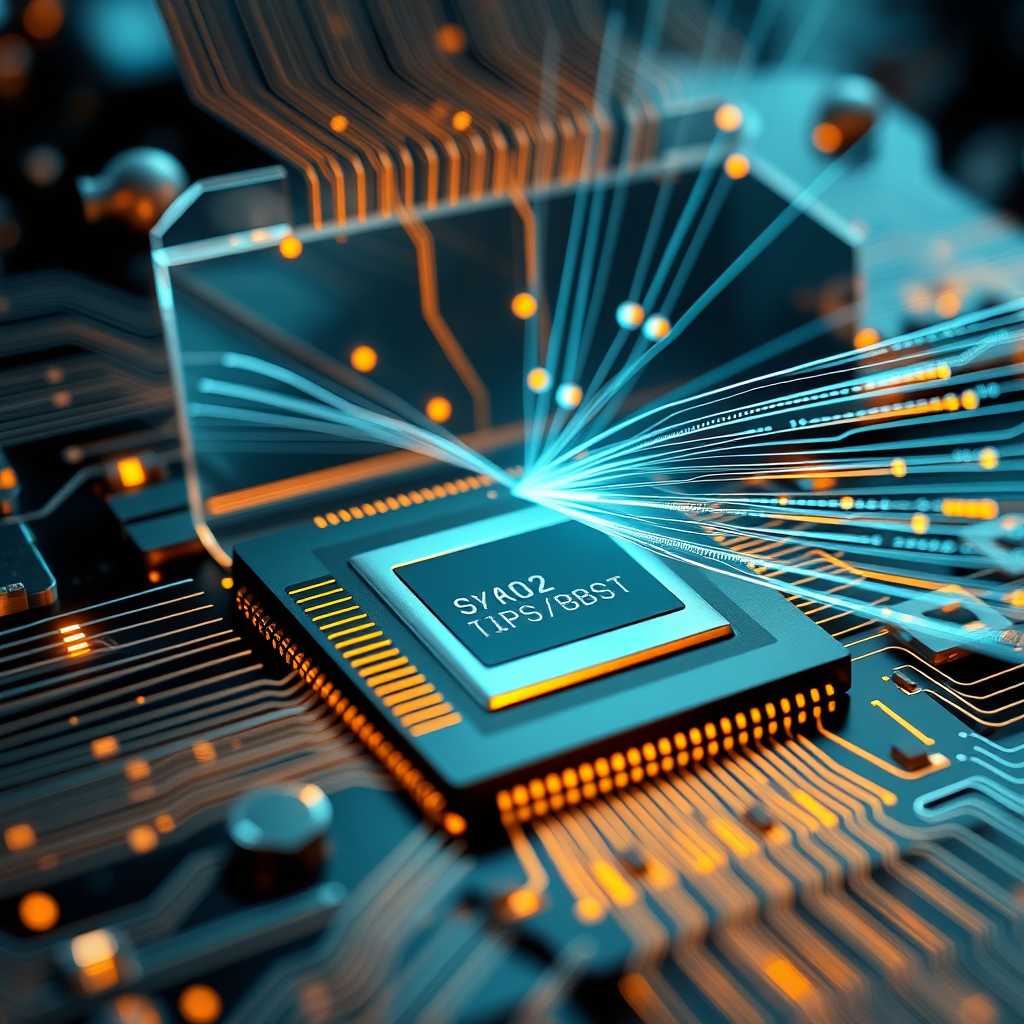
4) 2026 outlook: regulation pressure, new compute paradigms, and what to do now
Regulation is becoming a design constraint, not a legal afterthought. In the U.S., the tension between federal posture and state-level rules is likely to keep compliance uncertain for teams shipping AI features across jurisdictions. Globally, the direction of travel is clear: more transparency obligations, stronger incident reporting expectations, and sharper scrutiny on bias and safety claims—especially where AI touches workers, customers, or critical infrastructure.
At the same time, research into radically lower-power compute is accelerating. One notable direction is wave-based computation using collective electron behavior rather than conventional current switching. The strategic implication isn’t that you should redesign products around it today; it’s that energy efficiency could eventually arrive from non-obvious places, potentially leveraging familiar semiconductor materials while changing how logic is expressed. Teams that design modular systems—clean interfaces between sensing, inference, retrieval, and control—will be able to adopt new accelerators without rebuilding everything.
The near-term playbook is straightforward: push latency-sensitive decisions to Edge AI, keep IoT telemetry governance tight, use RAG to control LLM inference behavior, and invest in reliability engineering as a core capability—not an after-action report.
Learn more about our applied IoT + AI work

Metadata:
Title: Edge AI in 2025: Power, Networking, Reliability, and Practical LLM Inference
Description: A 2025 technical perspective on the AI power wall: why Edge AI, IoT telemetry, predictive maintenance, RAG-driven LLM inference, and reliability engineering matter as much as GPUs—and how regulation shapes deployment choices.
Keywords: Edge AI, IoT telemetry, predictive maintenance, LLM inference, RAG, AI regulation