
Edge AI in 2025: Resilience, Governance, and the New Safety Baseline for Connected Systems
In 2025, connected infrastructure is entering a new phase: stability is no longer a default property—it’s something you continuously earn through operations.
Whether you’re deploying Edge AI on a production line or relying on satellites and cloud computing for logistics visibility, the risk profile is converging around one theme: tight coupling and low tolerance for error.

1) When “everything works” depends on perfect decisions
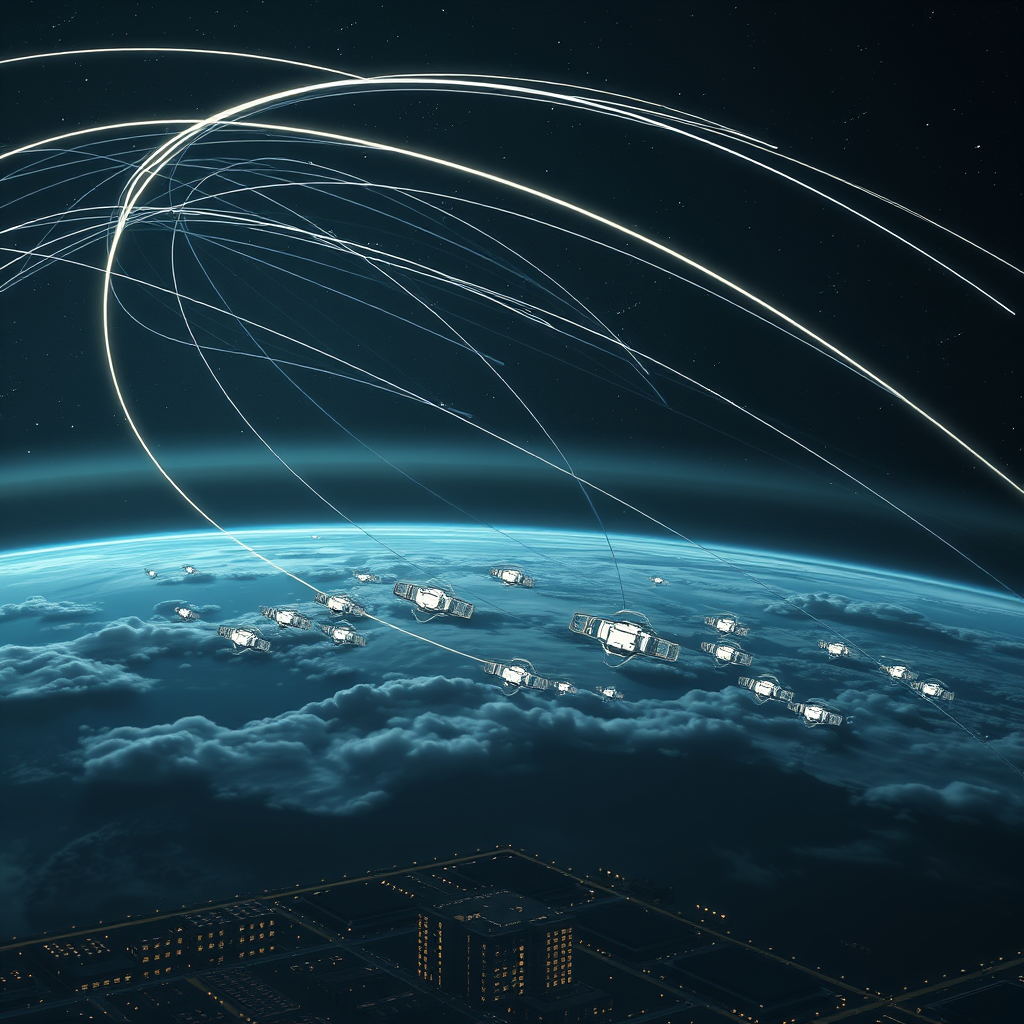
Many modern systems appear robust until you ask a simple question: what happens if maneuvering stops, updates fail, or coordination breaks down? In space operations, researchers have proposed a straightforward stress indicator that frames congestion in time-to-first-collision terms under a worst-case loss of maneuvering. The uncomfortable takeaway isn’t imminent doom; it’s how much day-to-day stability depends on constant, correct actions by many independent actors.
Industrial and logistics stacks are moving in the same direction. As fleets, warehouses, and plants add sensors, automation, and model-driven decisioning, “ordinary” failures become systemic: a firmware bug, a bad configuration push, or a degraded model can ripple across thousands of endpoints.
Operational reality check: The more autonomy you add, the more your system becomes a governance problem—because safe outcomes depend on how decisions are made, audited, and corrected under pressure.
2) Edge AI vs. cloud computing: choosing failure modes, not just architectures
The Edge AI vs. cloud inference debate is often framed as latency and cost. That’s incomplete. The strategic question is which failure mode you can tolerate.
Edge AI reduces dependency on network availability and can keep safety functions running during outages. Cloud computing centralizes orchestration and accelerates iteration, but it can also create correlated failures when a single service or policy change affects every site at once. In practice, most serious deployments land on a hybrid pattern: edge for control and detection, cloud for aggregation, training, and fleet-wide governance.
Two implementation details separate resilient systems from fragile ones:
Model packaging that matches your constraints: quantization and pruning can make inference viable on constrained devices, but you must validate accuracy drift on real sensor distributions, not just lab datasets.
Explicit fallbacks: when confidence is low, the system needs a defined safe behavior (hold last known good state, request human review, or degrade to rule-based control).
Fleet observability as a first-class feature: IoT telemetry should track not only sensor values but model versions, confidence, latency, and data quality signals.
Change control for models: treat model releases like software releases, with staged rollout, canarying, and rollback triggers tied to operational KPIs.
This is where predictive maintenance becomes more than anomaly detection. The win is operational continuity: fewer emergency stops, fewer repeat failures, and clearer root-cause analysis when something does go wrong.
3) LLM and RAG in the field: making AI useful without letting it invent reality
LLM adoption is accelerating in high-stakes domains, including health information and frontline operations. The core problem is not that LLMs are “bad,” but that a fluent interface can be mistaken for a verified one. In industrial settings, the equivalent risk is a technician acting on a confident-sounding recommendation that wasn’t grounded in the right asset history or procedure.
RAG (retrieval-augmented generation) is emerging as the pragmatic middle ground: you keep the LLM’s usability, but you constrain outputs to what your controlled knowledge sources support—maintenance logs, approved SOPs, engineering notes, and parts catalogs.
For IoT telemetry-heavy environments, the best pattern is “RAG plus runtime context”: retrieve documents and bind them with live signals (vibration, temperature, power quality, utilization). The assistant isn’t just answering questions; it’s explaining recommendations with operational evidence. That’s how you reduce mean time to repair without increasing compliance risk.
Governance matters here as much as architecture. If regulators move toward stricter accountability, organizations will need traceability: what the model saw, what it retrieved, what it recommended, and who approved the action.
4) Safety engineering is becoming the template for AI governance
Some of the most instructive innovation isn’t in AI at all—it’s in safety layers designed for when procedures fail. In power work, for example, protection concepts like conductive paths and shielding are engineered to reduce harm even when the environment behaves unexpectedly. In structural engineering, simulation-driven design tries to answer uncomfortable questions before the real world forces the lesson.
That mindset is now the baseline for Edge AI systems. You don’t deploy automation assuming perfect operation; you deploy it assuming the occasional bad sensor, ambiguous scenario, or human workaround—and you design controls accordingly.
For technical leaders, the governance playbook is increasingly clear:
Define “unsafe” explicitly: quantify unacceptable outcomes (downtime thresholds, safety margins, quality escapes) and map them to automated stops or human approval steps.
Separate decision support from control: where risk is high, keep the model advisory until monitoring proves stability.
Practice incident response for AI: rehearse rollback, model quarantine, and forensic review using the same discipline as cybersecurity drills.
Invest in leadership and continuity: strong governance requires owners, committees, and escalation paths that survive org churn, not just a single champion.
At Angelo Labs, we build Edge AI and IoT telemetry systems for real-world automation and decision support with resilience as a design constraint, not an afterthought.
Learn more about our applied IoT + AI work

Metadata:
Title: Edge AI Governance in 2025: IoT Telemetry, Predictive Maintenance, RAG, and Resilient Operations
Description: A technical, strategic view of how Edge AI and cloud computing are converging on governance: fleet observability, safe fallbacks, predictive maintenance, and RAG patterns for LLMs in real-world automation.
Keywords: Edge AI, IoT telemetry, predictive maintenance, RAG, LLM, cloud computing